
3.3 / The finer distinctions of truth + tradition
Navigating the love of money with the best of intentions

A month went by and I didn’t notice.
Life’s been lifin’. Podcast is going amazing. I’m taking some of this content and Nick and I are talking about it there. Make sure that you’re subscribed on your preferred platform.
I’ve got a literary agent for the first time in my life. I’ll have to tell that story sometime. But I’ve been spending most of this year writing a new book (not the Vow of Prosperity…yet). Hopefully it’ll be out by 2026. Along with the twins we’re having in May. Did I say life was lifin’?
I’ve still also got so much to write about on the Vow of Prosperity. If you’re new and reading this, welcome! I’d encourage you to start at the beginning of the VOP section on the site to get caught up.
“When people do not accept divine guidance, they run wild. But whoever obeys the law is joyful.” (Proverbs 29:18)
The truth is, we’re all trying to navigate the love of money. Especially if we want to do life God’s way. I believe that we have the best of intentions. Like Proverbs 29, we are trying to do our best to not run wild and accept God’s “law” in our lives. The majority of Christians want to do what God says. So, what’s the problem? Ask yourself this question: “how many of the rules you follow are actually written in Scripture, and where are they written?” This can be a dangerous question. Like me, you’ll probably see how much of what you do is based on what other people have said that Scripture says. Many of us have created rules for life that are not based on truth, they are based on another person’s interpretation of truth. We go to church, we hear the Pastor tell us what to do, we go home and do it. However, there’s a step we miss. A step that the Bereans didn’t miss. We don’t verify the “truth” we are being handed, and carelessly do what someone told us to do because they happen to be some kind of authority figure.
Let’s go back to Jesus and his discussion with the Pharisees in Mark 7.
“8 For you ignore God’s law and substitute your own tradition.”
9 Then he said, “You skillfully sidestep God’s law in order to hold on to your own tradition.
13 And so you cancel the word of God in order to hand down your own tradition. And this is only one example among many others.” (Mark 7:8-9,13 ESV)
The Pharisees are the bad guys of the New Testament. Believe it or not, like most things, they started out with good intentions. Their intention was to please God by following all of the laws written in Scripture. Then, they made a mistake. Their mistake was in believing that their interpretation of Scripture was the only true interpretation. In their minds, they were smarter, wiser, and followed God more intentionally than everyone. This entitled them to require everyone to interpret Scripture their way. The truth is, Pharisees have always been around. You can see them in every church tradition and denomination that exists.
Pursuing deeper knowledge is an incredible thing. There are way more benefits to having knowledge than not having it. One of the problems with pursuing knowledge however is what Paul says in 1 Corinthians 8:1 (NLT): “while knowledge makes us feel important, it is love that strengthens the church.” Other translations say that it is knowledge that “puffs up” but love that “builds up.” All of our search for knowledge and truth must be balanced with a desire to use our knowledge in service to others. That’s where Pharisees - ancient and modern - tend to make their mistakes. There’s nothing wrong with seeking knowledge. The problem arises when we begin to think that our knowledge is now something that needs to be imposed on others. Pharisees weaponize their knowledge. Instead of using what they know to encourage, inspire and uplift others, they use it to criticize, judge and damage others.
Why was Jesus so hard on the Pharisees in Mark 7 and throughout his life on earth? The Pharisees spent most of their time telling people about all the traditions(rules) they needed to observe that weren’t written in Scripture. In Mark 7, the word tradition is παράδοσις (parádosis) in Greek. It means a set of beliefs and actions delivered or communicated to another person. The problem Jesus seemed to have with the Pharisees is that they were handing down their own beliefs and actions, not the truth behind those beliefs and actions. In some cases, the difference between truth and traditions can be slight. So slight that for many people, they don’t think it matters.
Think about life in the context of a journey. If we take a road trip from Dallas - where I live - to LA, that’s roughly 1200 miles. For the sake of this example, let’s say that the journey is a straight line. If I start the journey, and deviate one degree off course, by the end of 1200 miles I would be 21 miles off target. One degree doesn’t seem like a lot. After one mile, it’s only about 92 feet. That’s noticeable, but easily fixable. What about in aviation? If we were taking a plane flight from NYC to Tokyo, that’s a journey of around 6700 miles. If we were one degree off course, after a mile, we’d be 92 feet off course. After 1200 miles, we’d be 21 miles (113,800 feet) off course. At the conclusion of our 6700 mile journey, we’d be over 118 miles (620,900 feet) off course, and depending on which direction, we might end up in the ocean instead of Japan. In 1969, Apollo 11 landed on the moon. The journey between the earth and the moon is a distance of over 238,900 miles. Over that distance, if the Apollo astronauts were one degree off course, they would have missed the moon by over 4000 miles (22 million feet). The moon itself is only 2,159 miles in diameter. The space between the astronauts and the moon would have been almost twice the size of the moon itself. In fact, if Apollo 11 was just .1 degrees off course, they still would have missed the moon by over 400 miles (2 million+ feet). What if you were .1 degrees off on your road trip to LA or your flight to Tokyo? You’d only be around 2 miles (10,000 feet) off course driving from Dallas to LA. You’d be 12 miles (62,000 feet) off course on your flight from NYC to Tokyo.

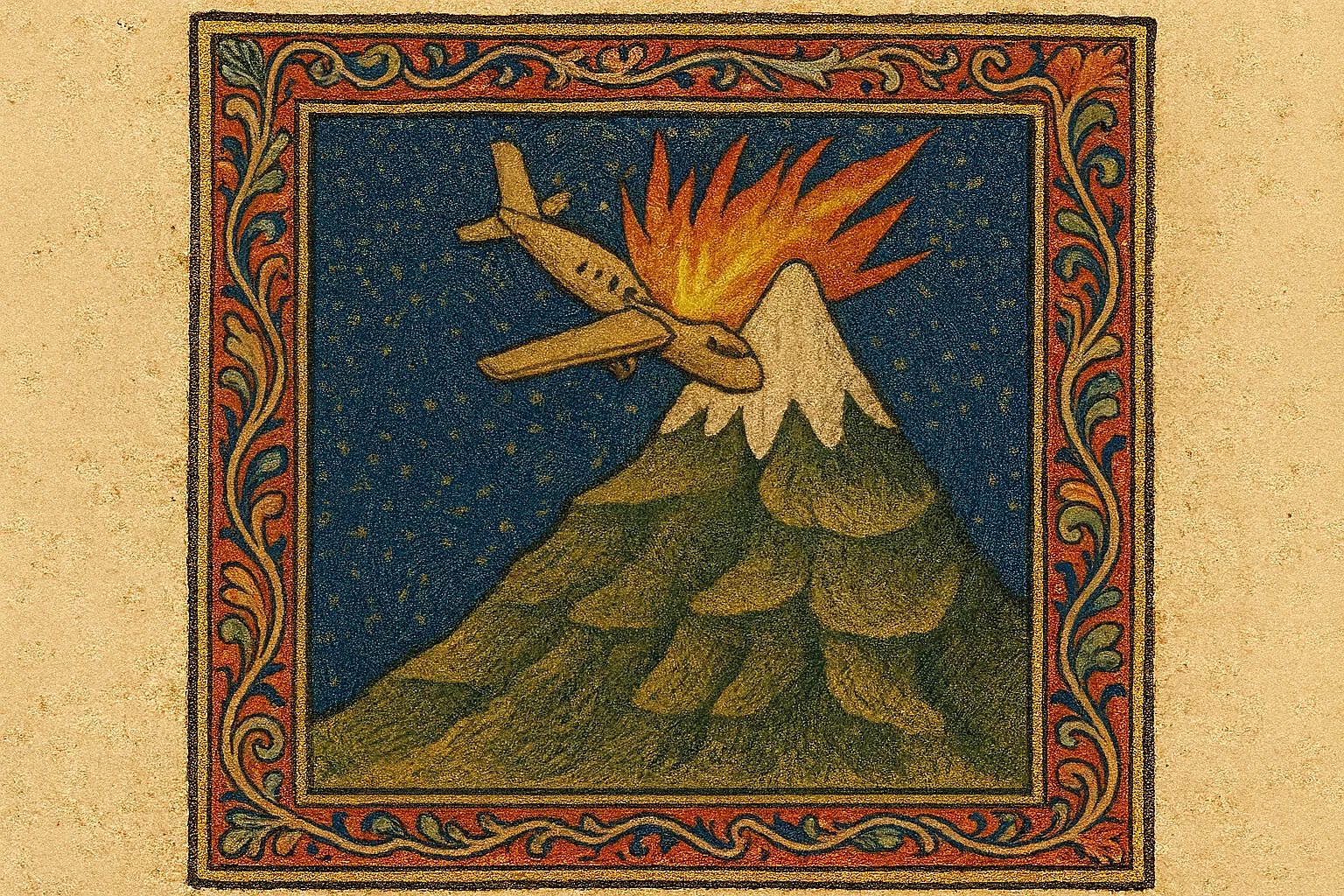
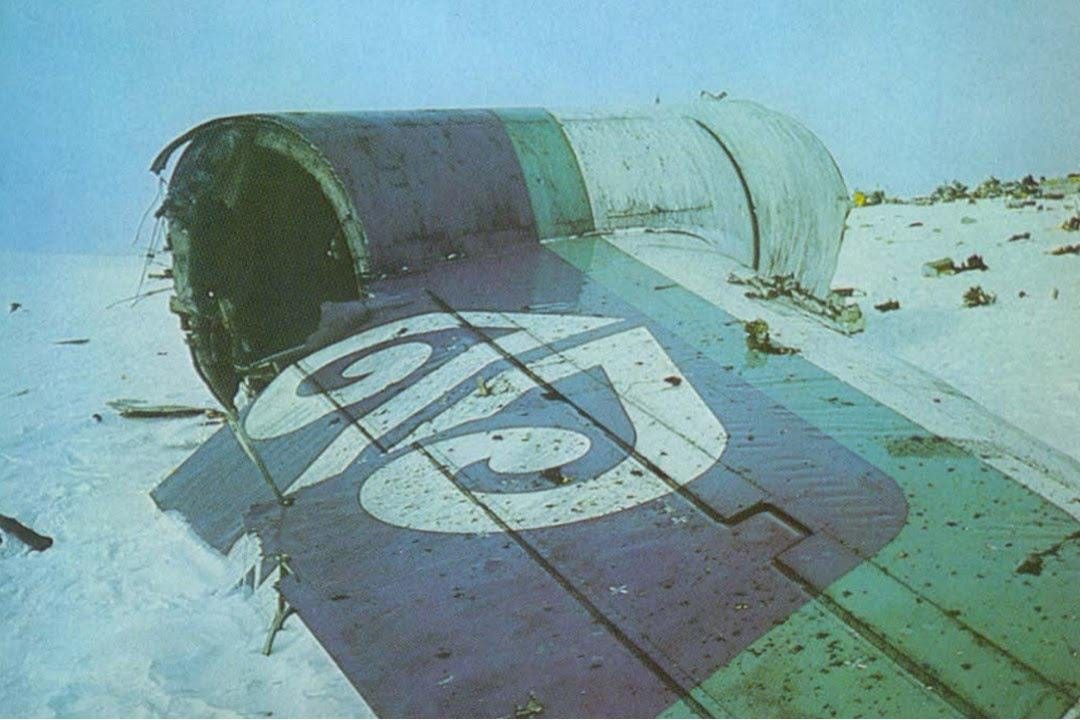
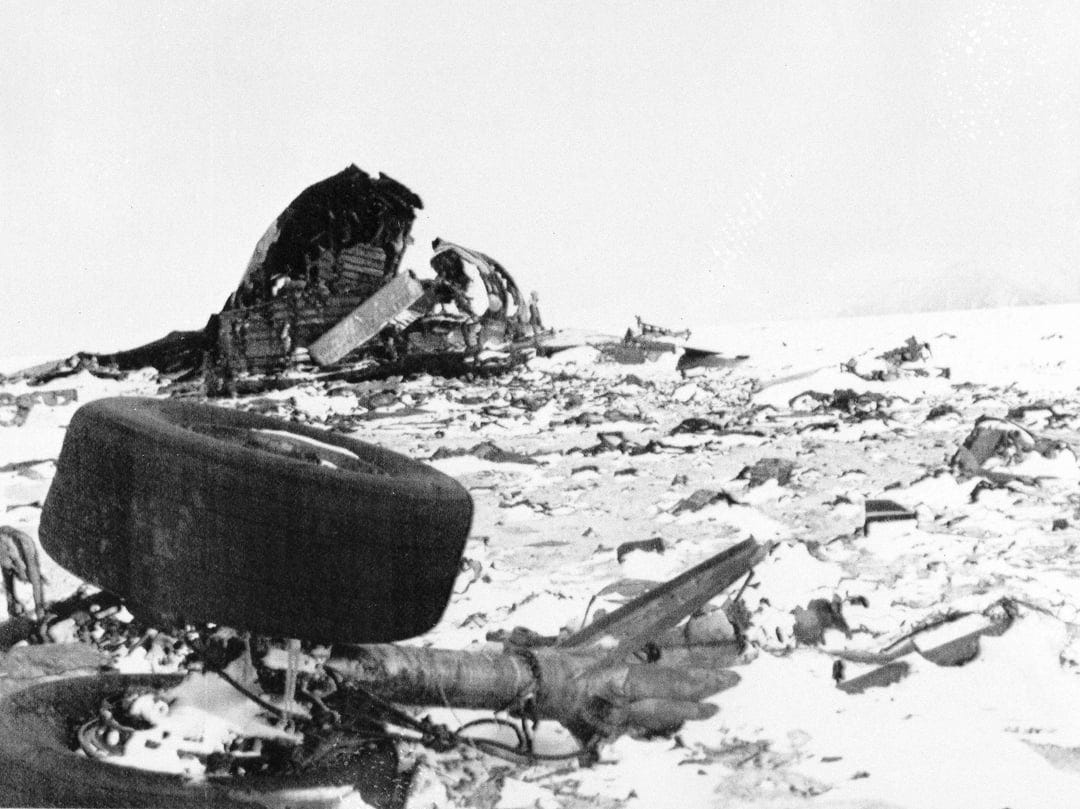
This phenomenon took place on a 1979 plane flight from New Zealand to Antartica. In the 1970’s, airlines began marketing guided low-lying flights over Antarctica as unique sightseeing experiences. These trips were popular and guided by famous explorers like Sir Edmund Hilary and Peter Mulgrew.

Before the flight, the crew corrected what they thought was an error in the flight coordinates, changing the flight’s course by two degrees. As they approached Antartica, the pilots descended to an altitude of 2,000 feet and switched to autopilot. Because of their two degree change, the plane was 28 miles to the east of where the pilots assumed they were. This difference put them directly in the path of Mount Erebus, an active volcano that rises 12,000 feet above the frozen landscape. Outside of the windows, the clouds blended with the snow-covered volcano and created a whiteout. This deceived the crew into believing that the volcano was the Ross Ice Shelf, an expanse of floating ice. They believed they were flying over flat ground. As they flew closer to the volcano, the slope of the mountain sounded the ground warning alarm. The terrain of the volcano was so steep that it was only a few seconds before the plane crashed into the side of the mountain, killing everyone on board. This terrible tragedy was caused by an error of two degrees.


Growing up, my dad taught me that “wisdom is the ability to make finer distinctions.” The journey of our lives is much more like space travel than a road trip. The distinction between truth and traditions can seem small, but over the journey of our life, even minor mistakes have far reaching consequences.