
3.6 / In all things charity
“In essentials unity, in nonessentials liberty, in all things charity.”

“In essentials unity, in nonessentials liberty, in all things charity.” / Rupert Meldenius
What’s an essential?
There are certain things that are essential to Biblical faith that everyone must agree on. Some theologians say that starts with the Nicene Creed. Some say that it is the Apostle’s Creed, which predates the Nicene Creed. These creeds are helpful starts to understanding what is essential. Creeds can be helpful to give us an interpretation of essentials, but a creed only has the power that the truth of Scripture gives it. Traditions, creeds and interpretations work a lot like shortcuts. Sometimes, when you take a shortcut, you miss the meaning of the journey. Each person who claims to be a Christian must decide for themselves how deep they wish to go in truly understanding their faith, or just taking someone’s word for it. When we hold on to traditions, we are taking someone’s word for it. They may be right, they may be wrong. Regardless, they won’t experience the consequences of what we believe, we will. That’s why we need to be careful about what we choose to believe. We may all define essentials differently. But I would encourage you to not consider everything essential. An essential is the difference between heaven and hell.
non-essentials + charity
A non-essential is a preference. For instance, is speaking in tongues essential to getting into heaven? Most Charismatics would say no. Yet, much of their theology is all about the “evidence” of the Holy Spirit working in our lives being speaking in tongues. It’s that actually the evidence? There’s nothing wrong with differing opinions on this issue because it’s not essential for “getting into heaven.” Wherever something is not essential to Biblical faith, that’s where we can embrace liberty. Non-essentials work like flavors of ice cream. In this metaphor, an essential would be you and I agreeing that we should eat ice cream. In order to be my friend, you’ve got to agree that ice cream is a good thing. That’s really not the problem. The problem arises when you and I both go to the ice cream shop and expect the ship to only serve our flavor and nothing else. Because our flavor is the tastiest flavor. Non-essentials are the preferences (flavors) that we prefer the essentials to be packaged in. If you like vanilla, and I like strawberry, we can still eat ice cream together without having to eat the same flavor.
Finally, and most importantly, in all things charity. Even if we disagree on essentials, we can learn to be kind, and tolerant of each other. Of course, this is the world in an ideal state. But the framework that Meldenius provides puts us on the right track in how we should probably think about essentials and non-essentials to our faith.
Whether its holiday foods, or our approach to the most serious things in life, our approach tends to be the same. We want to create boundaries and rules that keep us in a comfortable state. There is nothing inherently wrong with this. Unless, like Jesus said, we start to substitute safety in traditions for the risk of fully following God. We can often think that traditions empower us, but in many cases, they actually limit us. Many people work really hard to do the “right thing.” And end up, even with the best intentions, creating traditions that get us .1 degree off course. Over a long enough period of time, these traditions can become detached from truth enough that they hurt us instead of help us. So we must - like Bereans - always examine rules, interpretations and traditions against objective truth. As well as remind ourselves that traditions keep us comfortable, and being comfortable should not be our goal.
It is important that we analyze why and how traditions happen. There are over 45,000 Christian denominations in the world - read: faith traditions. (Source) Within these denominations there are innumerable factions and perspectives. Which means our traditions can almost be unlimited.
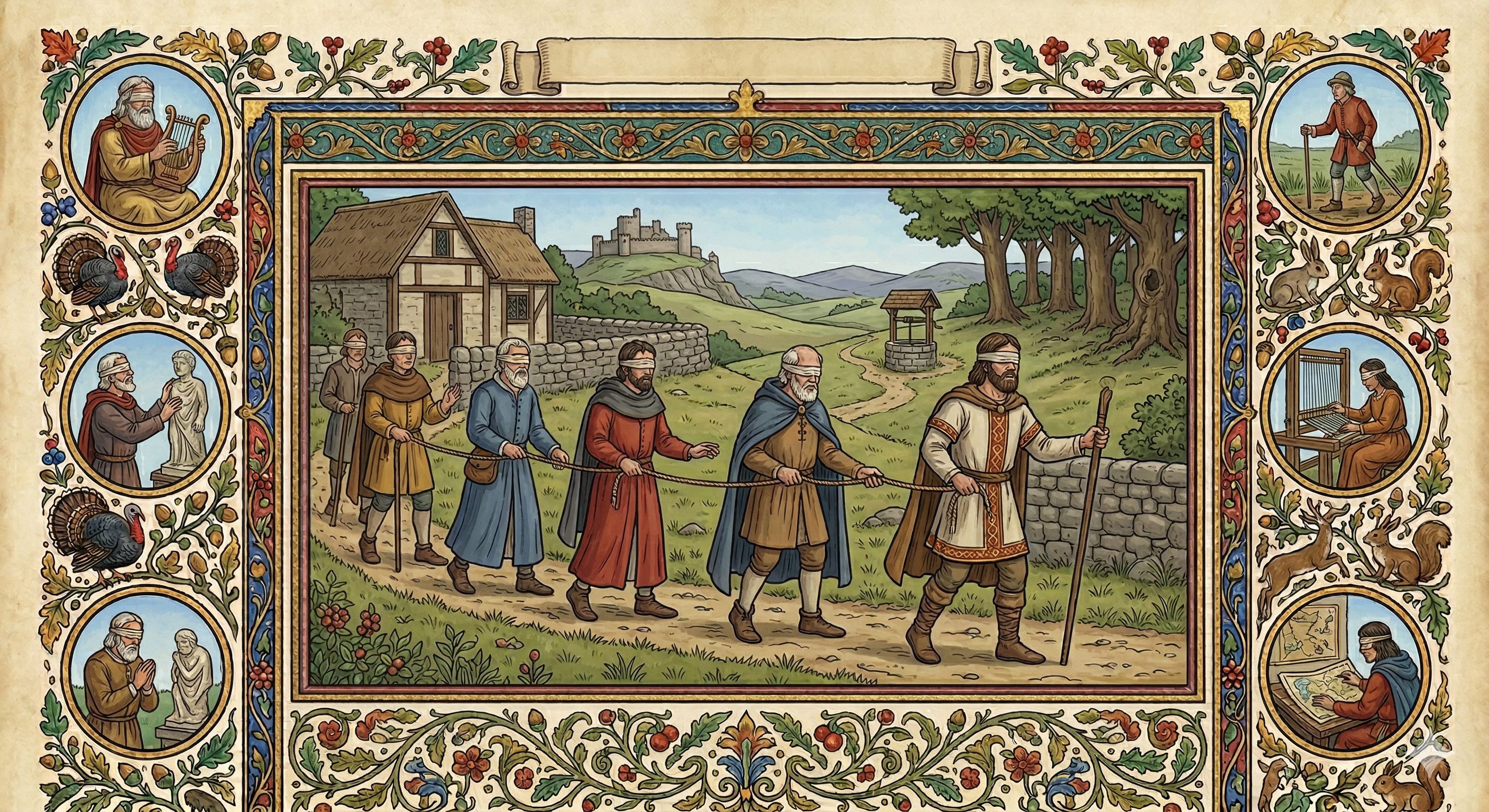
There is only one truth. But at the same time, there are as many interpretations of truth as there are people on the planet. Spread that out through 2000+ years of Christian history and the perspectives easily become uncountable. That’s why when we navigate all these various traditions and interpretations, we can’t be Biblically illiterate. All truth claims must be held up against an objective truth. The problem many people have is that the traditions and truth claims we experience are so effectively presented that we take them at face value. When we do that, we aren’t just ignorant. We harm ourselves by applying falsehoods to our lives and repeating them to our children. We don’t just become followers of man-made ideas disguised as commands of God, we become leaders who teach these things to others. In the Matthew 15 account of the same story from Mark 7, Jesus says this to His disciples about what they should do with Pharisees. “so ignore them. They are blind guides leading the blind, and if one blind person guides another, they will both fall into a ditch.” (Matthew 15:14, NLT). This should be a concerning passage to us. When a person is convinced that their traditions are also truth, God leaves them alone to fall into a ditch, along with everyone that they are leading. That’s one of the reasons why we can say “in all things charity.” Because Jesus himself told us to leave the blind people alone and let him worry about them falling into a ditch. It’s ultimately not our responsibility to correct the bad theology and doctrine around us. It is our responsibility to correct ours and make sure we are not a blind guide for blind people.